Five years of monitoring Kharkiv City Council: what has changed?
AMI and the nationwide “Assessment of Local Council Members” campaign have completed the fifth year of assessing Kharkiv city councillors.
1. How it began
AMI has participated since 2024 as the campaign’s regional partner in Kharkiv Region. Each year, the team assesses councillors using a common methodology covering biographies, meetings with residents, social media communication and reporting.
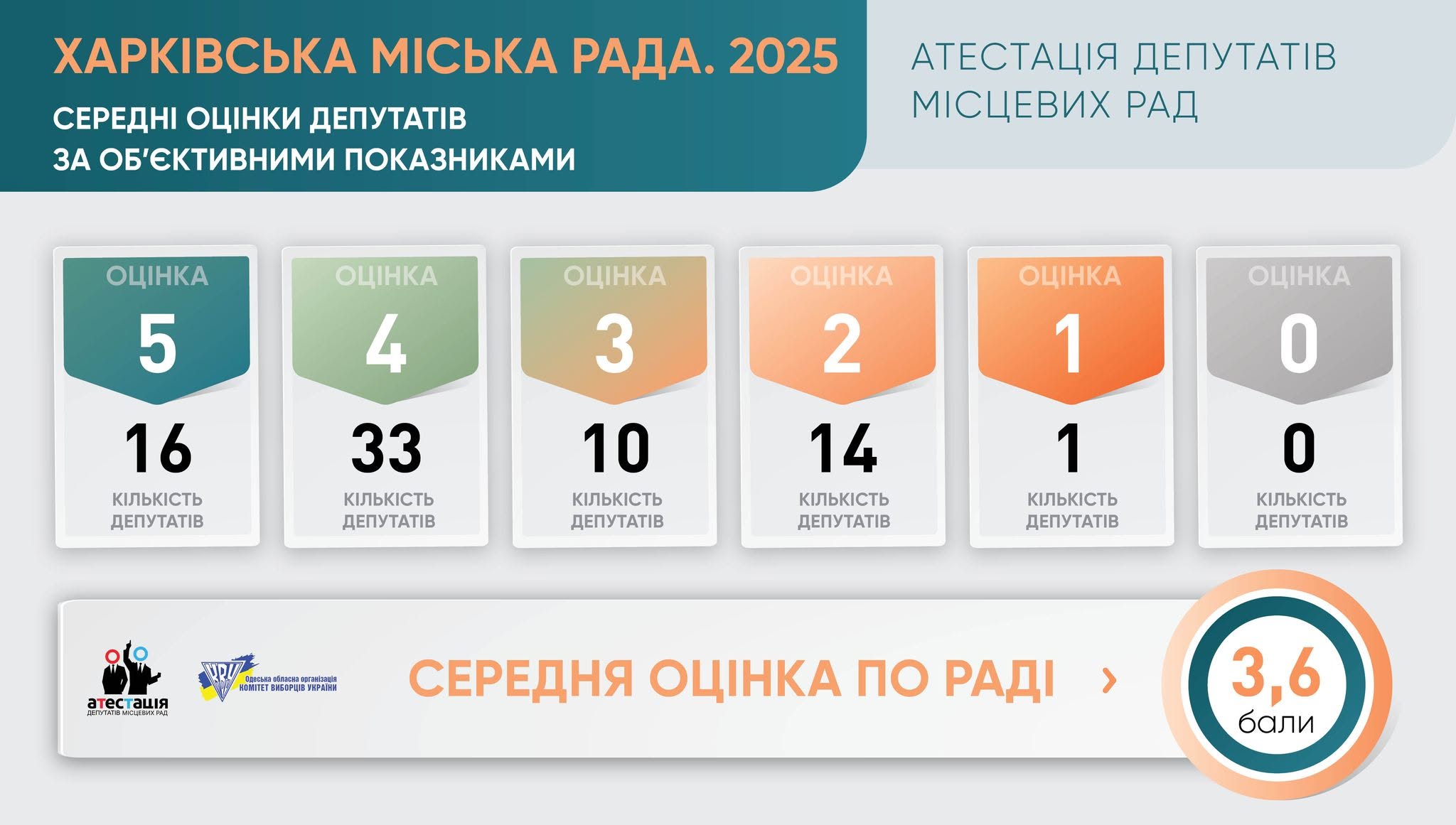
In 2025, the assessment covered 81 councillors in their fifth year in office. It ran alongside AMI’s main community projects during the full-scale war.
2. Results
The council’s average score rose from 2.9 in 2024 to 3.6 in 2025 — the highest in five years of monitoring.
For the first time, reporting became a more systematic practice rather than a set of isolated cases. Following AMI’s request, the council provided detailed materials, including report texts.
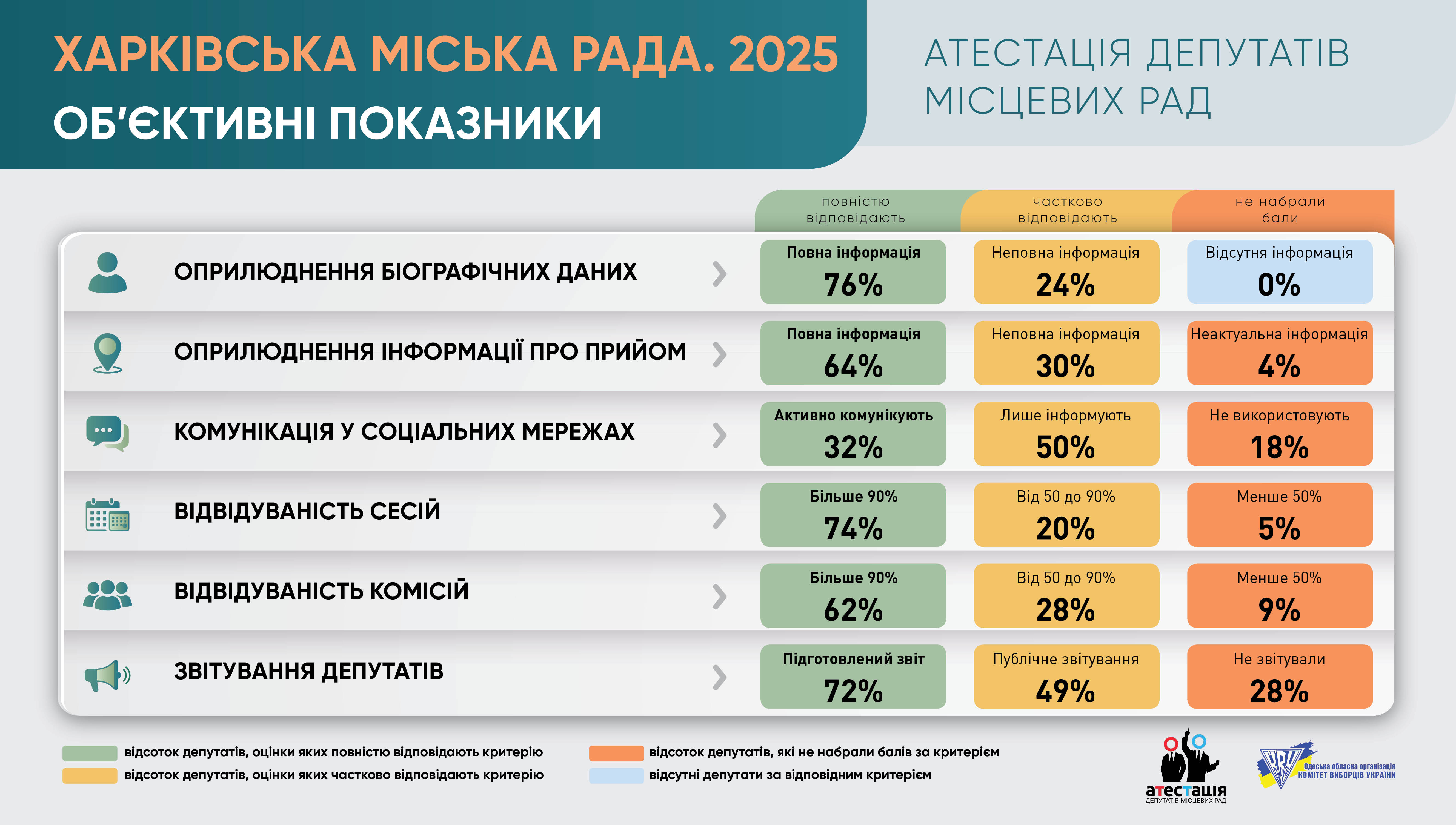
Every councillor now has a biography, and more than half contain all the required information.
The number of councillors maintaining two-way communication with voters rose to 60.
3. Challenges and achievements
Some councillors combine council duties with Armed Forces service or volunteering, which affects their capacity for council work. Even in this context, the overall trend is positive.
The central problem remains: openness on a website does not necessarily mean real contact with voters. Most councillors publish meeting information, but actual meetings cannot always be confirmed.
Social media is mainly used to provide updates; feedback and dialogue remain limited.
4. Community impact
Public monitoring is one of the few tools in Kharkiv that makes councillor inaction visible. The law provides no sanctions for failing to hold meetings or produce reports. Public assessment therefore creates an incentive for change without an enforcement mechanism.
Five years of consistent work have changed expectations: information missing as a matter of course in 2021 is increasingly seen as falling below the standard in 2025.
5. The project’s legacy
Read the detailed analysis: Transparency without contact: have Kharkiv city councillors genuinely become more open?
Download the full report with individual councillor indicators.
AMI continues its work within the campaign in 2026.
Implemented with support from the Odesa regional branch of the Committee of Voters of Ukraine as part of the nationwide “Assessment of Local Council Members” campaign.