.png)
EcoLight: autonomous lighting for Yaroshivka and Bezrukiv
1. How it began
Yaroshivka and Bezrukiv are villages in Solonytsivka community with no lit roads between them. Residents walked in darkness, trying to avoid potholes. Connecting to DTEK’s grid near the frontline would mean months of approvals, substantial infrastructure costs and dependence on power cuts, which reached 15–19 hours a day in winter 2025–2026.
The “EkoDiia” initiative group approached AMI to find another solution.
2. Results
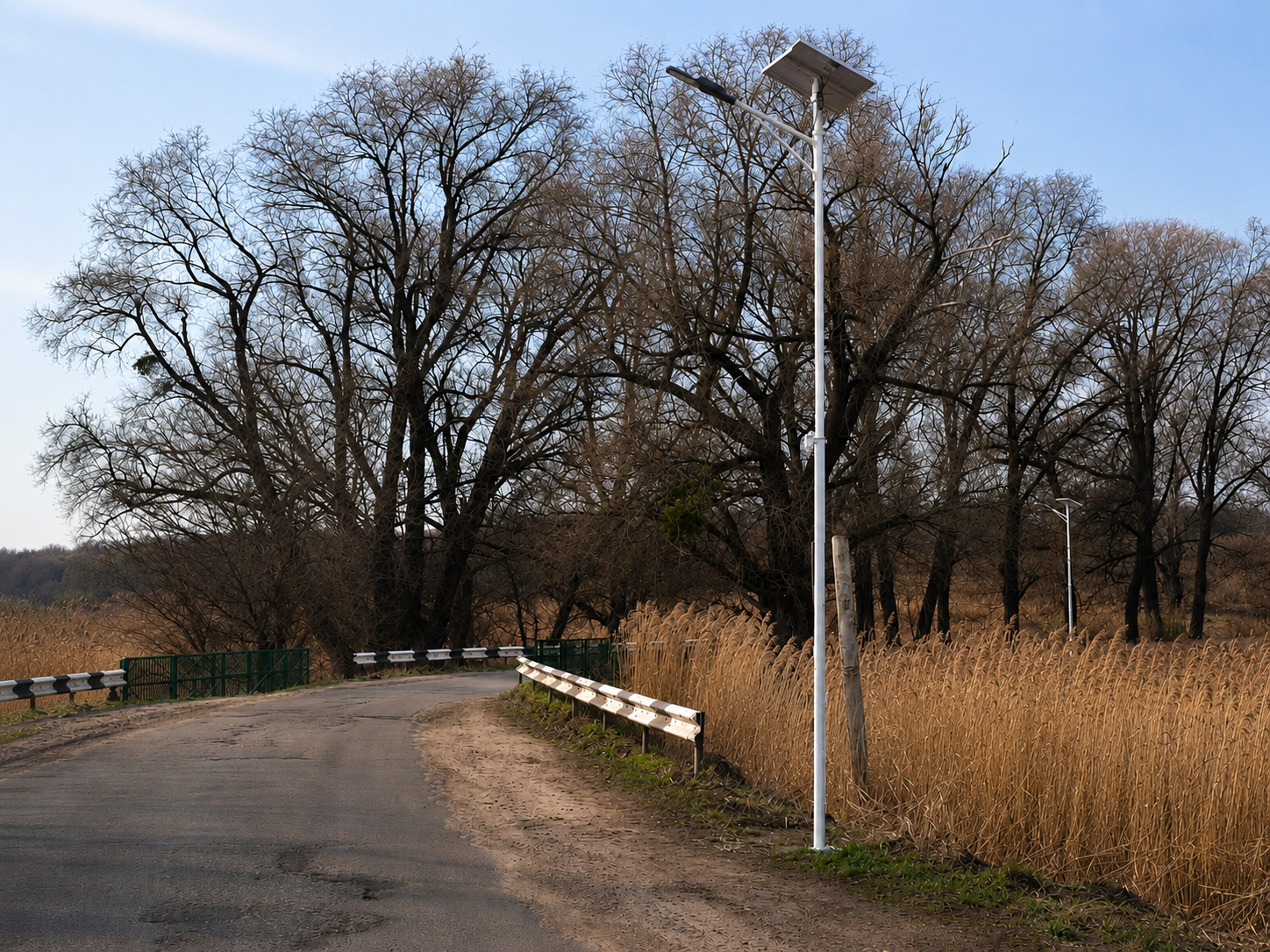
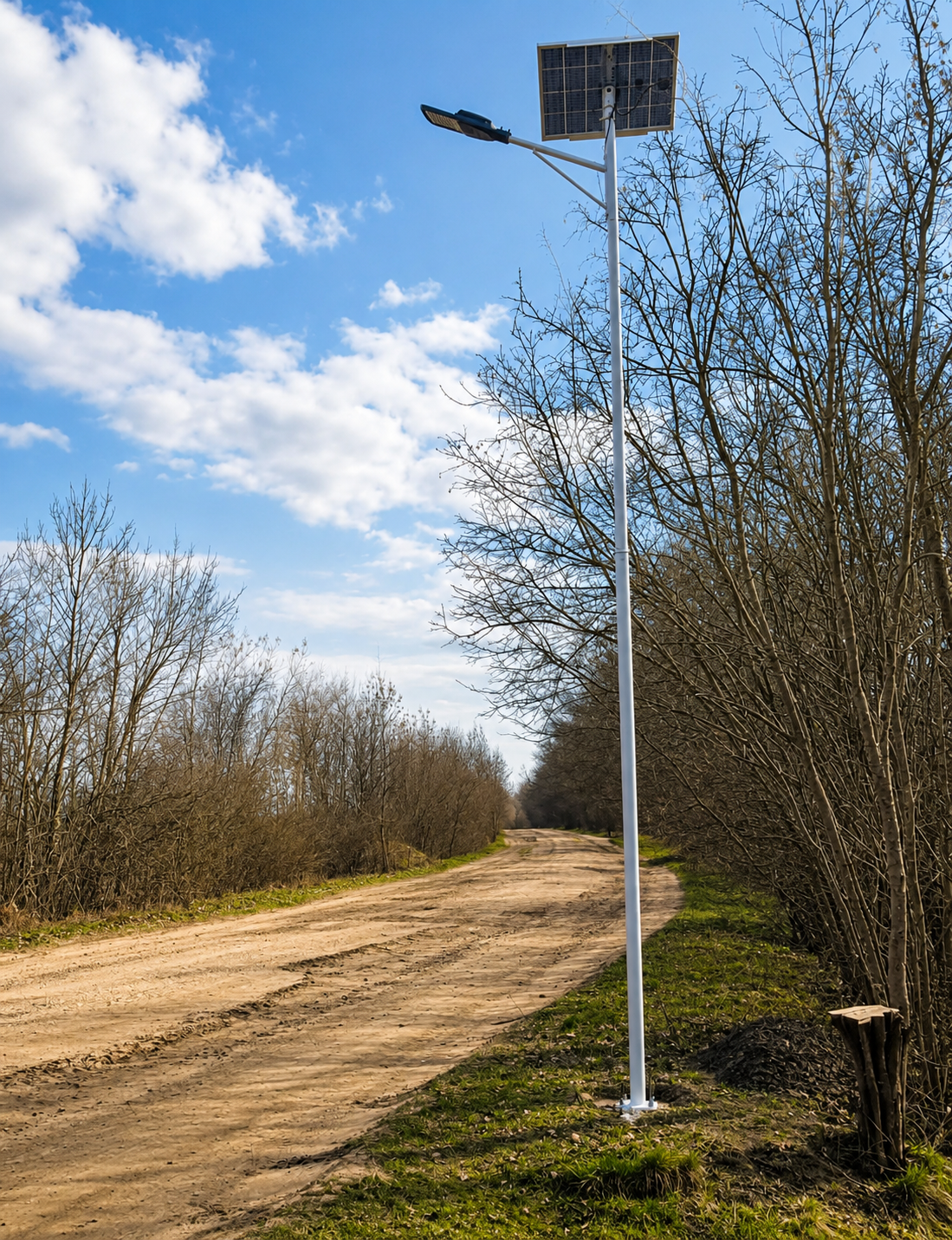
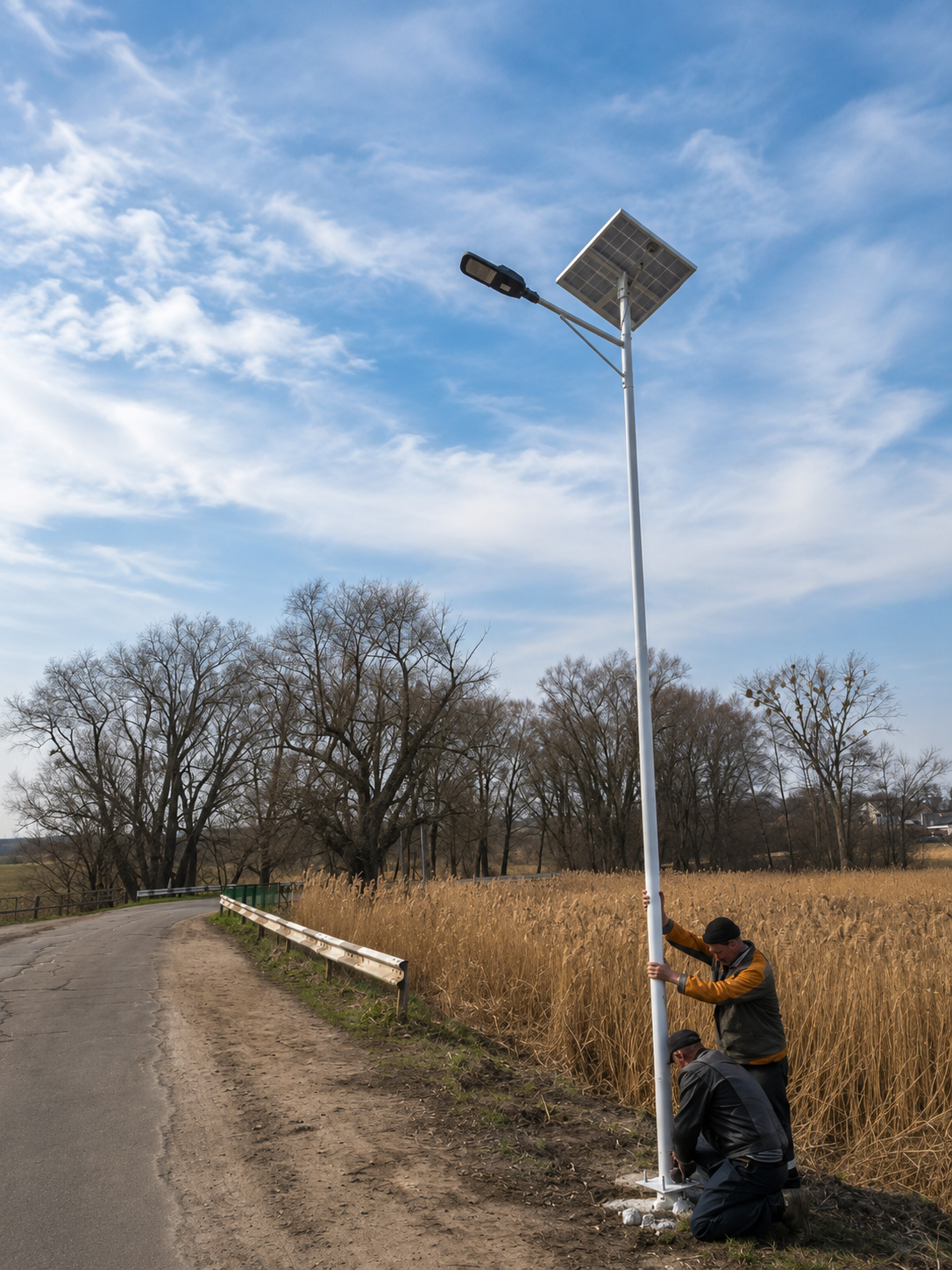
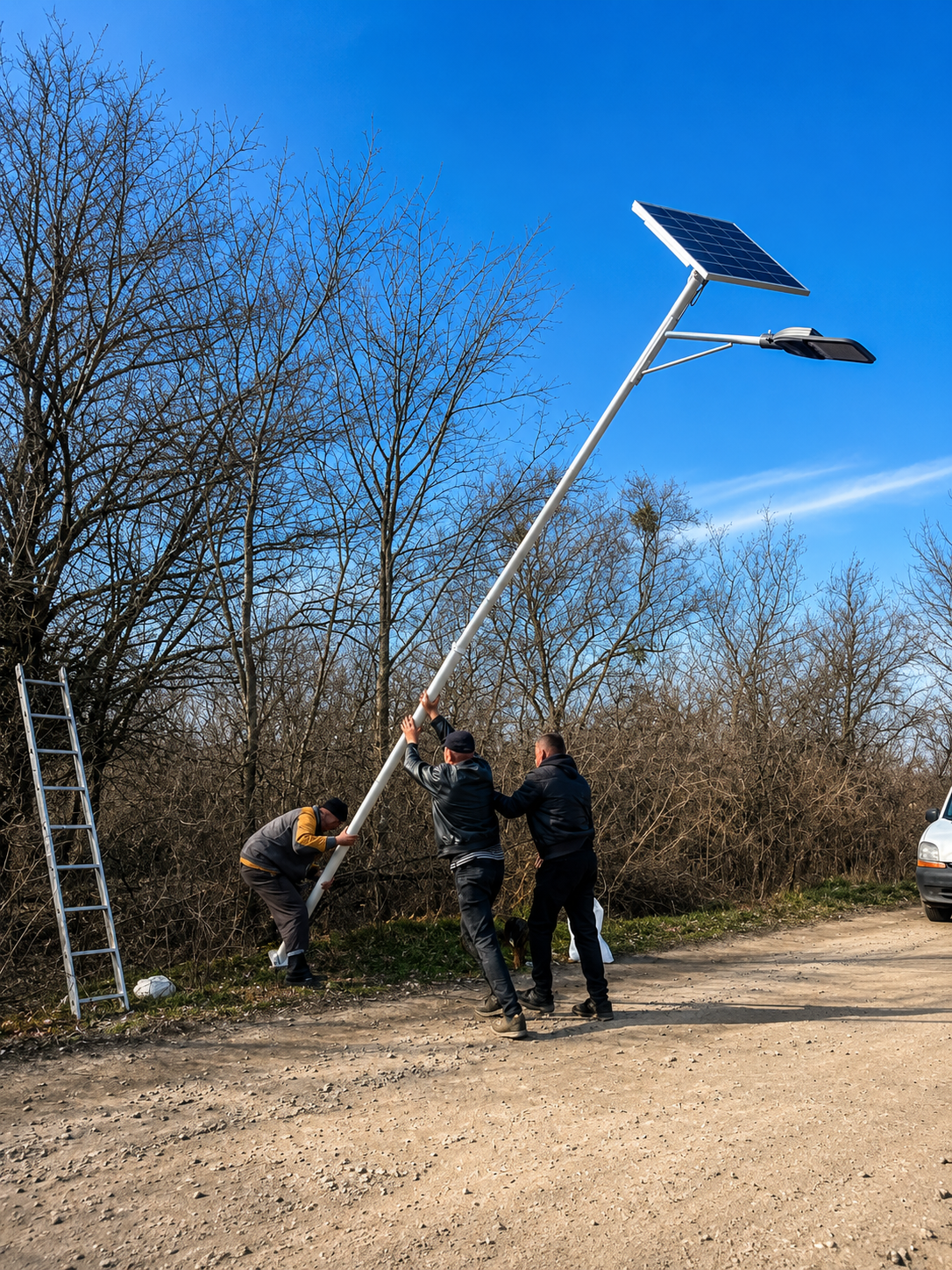
Six autonomous solar-powered LED lights were installed along the road between the villages. They need no grid connection or cabling and operate during prolonged blackouts. More than 750 residents from 113 families directly benefited. The equipment was transferred to community ownership.
The project forms part of Solonytsivka’s development strategy through 2027 and its systematic approach to energy-independent infrastructure.
3. Challenges and achievements
Ground and weather conditions required postponing pole installation from winter to spring. Equipment was delivered on time and work completed after temperatures rose.
This was the initiative group’s first grant-funded project. AMI supported the entire procurement cycle.
4. Community impact
Autonomous lighting avoids emergency power cuts, electricity supplier approvals and extensive earthworks while keeping maintenance costs low.
In villages damaged by shelling, such solutions can restore basic safety conditions quickly.
5. The project’s legacy
Yaroshivka and Bezrukiv gained lit roads for the first time. The community demonstrated the practical value of autonomous energy near the frontline and incorporated it into strategic planning.
Implemented through Community-Led Initiatives Support with funding from HEKS/EPER, coordinated with the International Charitable Foundation Alliance for Public Health.